Overview

About Guangzhou University
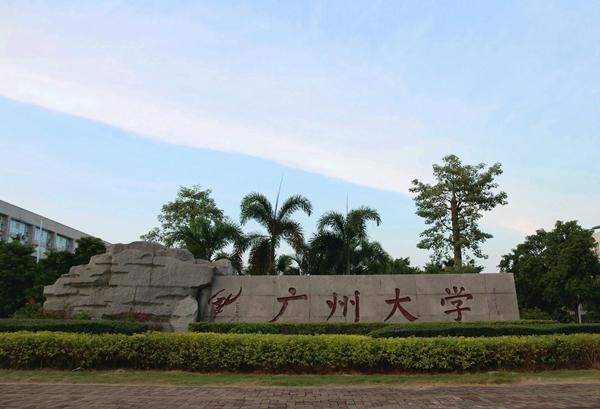
Guangzhou University (GZHU) traces its origins to 1927, when it was first established as a private institution. In 2000, it underwent a major consolidation through merger with five other higher education institutions, emerging as a comprehensive first‑tier university that bears the name of Guangzhou – China’s third largest city. Today, GZHU is strategically positioned at the nexus of local identity and global aspiration. Leveraging the national Double First‑Class initiative and the ambitious higher education agendas of Guangdong Province and Guangzhou Municipality, the University adheres to the Four Orientations and operationalises its Three Alignments to cultivate deep‑rooted synergies with both the city and the wider Guangdong–Hong Kong–Macao Greater Bay Area (GBA). Its academic portfolio prioritises emerging engineering disciplines, new humanities, and next‑generation teacher education, while also exploring pioneering frontiers in medical and agricultural sciences. Recognised as both a provincial key university under Guangdong’s high‑level development scheme and a municipal flagship institution in Guangzhou, GZHU embodies a dynamic blend of regional responsiveness and international vision.

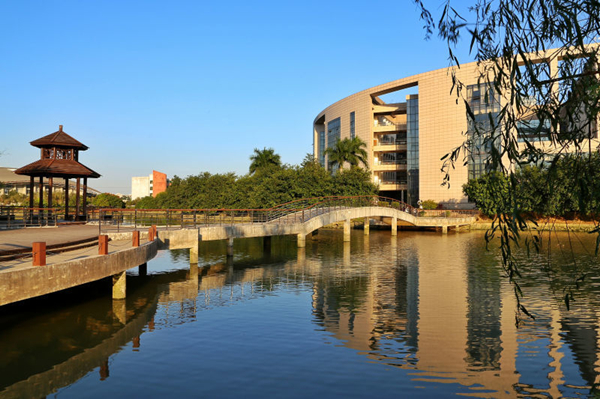
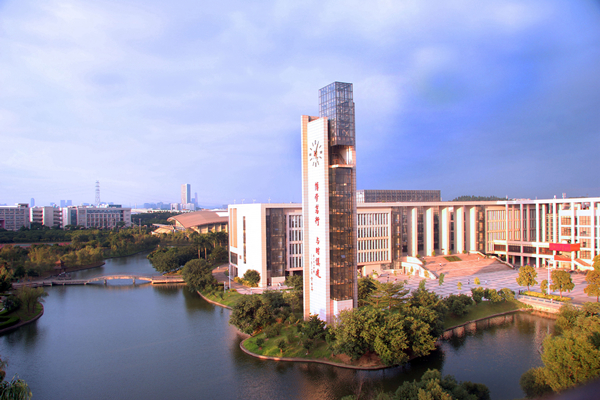
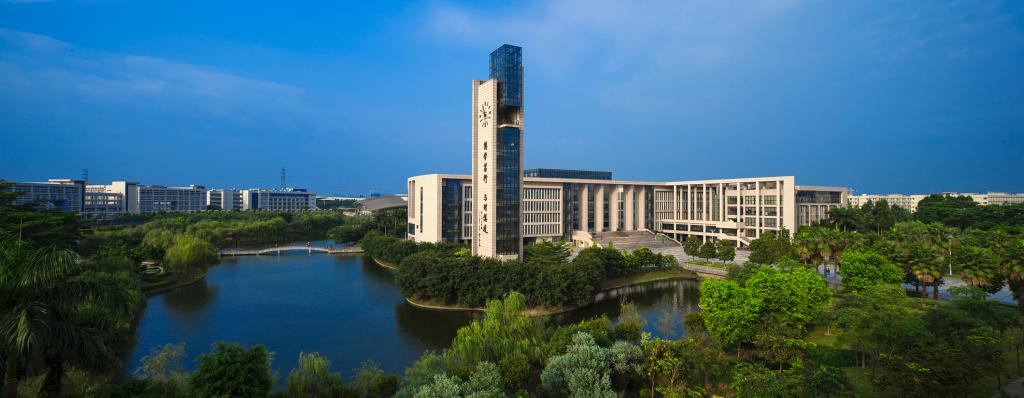
The University's footprint spans three campuses—the Higher Education Mega Center (main campus), Guihuagang, and Huangpu—home to over 29,600 full-time undergraduates and nearly 9,500 graduate students. Academically, the University comprises 26 schools covering 11 broad disciplines: Philosophy, Economics, Law, Education, Literature, History, Science, Engineering, Management, Arts, and Interdisciplinary Studies. It offers 14 first-level doctoral programs and professional doctoral degrees, 8 postdoctoral research stations, 34 academic master's programs, and 30 professional master's programs. For the 2025 undergraduate intake, 73 majors are available—41 in science and engineering, 22 in the humanities and social sciences, and 10 in arts and sports. Notably, 52 of these majors hold national or provincial "first-class" designation, representing 71% of the total undergraduate offerings for 2025.

Equally central to the University's mission is its faculty. Through a deliberate strategy of both nurturing homegrown talent and attracting top minds from around the world, the University has built a dynamic, highly qualified academic team. Currently, 3,371 faculty and staff are actively engaged, with 2,681 holding professional technical titles and 2,138 serving as full-time teaching and research staff. Among the latter, 1,369 hold senior academic ranks (associate professor or above), and 1,907 hold doctoral degrees. The University's scholarly distinction is further underscored by four full-time members of the Chinese Academy of Sciences and the Chinese Academy of Engineering, 105 national talent awardees, 140 recipients of provincial and ministerial honors, and 259 high-level talents recognised by Guangzhou Municipality.

Guided by a clear strategic vision—rooted in market demand, world-class aspirations, innovation-driven growth, distinctive character, and focused priorities—the University has adopted a discipline-building framework that strengthens the basic sciences, refines engineering, elevates the humanities and social sciences, preserves the distinctiveness of teacher education, and actively promotes interdisciplinary integration. This ongoing optimisation of the disciplinary landscape involves deepening the foundational role of the humanities, social sciences, and basic sciences; reinforcing the unique strengths of teacher education and the arts; and concentrating engineering resources to foster cross-disciplinary collaboration and cultivate new capabilities in emerging engineering fields—all in response to the evolving needs of cutting-edge technologies and high-tech industries.   

A well-established, tiered system of key disciplines has taken shape, comprising 6 provincial-level key disciplines designated for the University's Double First‑Class bid, 14 provincial key disciplines, and 18 municipal key and supported disciplines. Thirteen disciplines have earned a place in the ESI Global Top 1%: Engineering, Computer Science, Chemistry, Materials Science, Environment/Ecology, Social Sciences (General), Mathematics, Plant & Animal Science, Geosciences, Agricultural Sciences, Psychiatry/Psychology, Biology & Biochemistry, and Economics & Business. Engineering stands out further, ranking among the global top 1‰.

International recognition continues to grow. In the 2025 Shanghai Ranking's Global Ranking of Academic Subjects, 25 of the University's disciplines are listed—with Civil Engineering placed in the world's top 50, and Artificial Intelligence as well as Computer Science & Engineering in the top 100. In the domestic 2025 Shanghai Ranking China Ranking of Academic Subjects, 30 disciplines appear: 1 ranks in the top 7% nationally, 3 rank between 7% and 12%, and 26 fall within the 12%–50% bracket. The University has been consistently ranked among China's top 100 universities in the Shanghai Ranking China University Rankings since 2020. On the global stage, it holds 468th place worldwide—and 95th among mainland Chinese institutions—in the 2025 Shanghai Ranking Academic Ranking of World Universities, while the U.S. News 2025–2026 Best Global Universities Rankings place it at 454th globally.

Guided by the core mission of fostering virtue through education and placing undergraduate teaching at the heart of its work, the University is committed to nurturing graduates of integrity and patriotism—individuals with broad perspectives, a well-rounded appreciation for sports and the arts, and the capacity for sustained personal and professional growth. To this end, it has established five public general education centres covering cultural literacy, physical education, the arts, languages, and labour education, all designed to cultivate innovative talents with strong, comprehensive competencies.

D0B1

The University's undergraduate programmes enjoy widespread recognition: 40 are designated national first-class majors, while 52 (including the national ones) hold provincial first-class status. In addition, it offers 5 national featured majors, 1 national comprehensive reform pilot major, 1 national innovation experimental zone for talent training models, 1 national off-campus practical teaching base for undergraduates, 1 national experimental teaching demonstration centre, and 1 national modern industrial college, alongside 3 provincial-level key modern industrial colleges. The University also boasts 1 national teaching team and 68 provincial teaching teams and curriculum teaching offices, whose members have collectively received 5 national Teaching Achievement Awards and 52 provincial Teaching Achievement Awards.

The University's Golden Course initiative has yielded impressive results, with 44 national first-class undergraduate courses, 130 provincial first-class undergraduate courses, and 73 provincial premium course series. It also offers 200 courses that feature curriculum connectivity and mutual credit recognition with world-class universities. Three faculty teams have been honoured as National Huang Danian-style University Teaching Teams—in Earthquake Mitigation & Disaster Prevention, Mathematics Education, and Cyberspace Security. The Three-Innovation Camp Makerspace has been accredited as a national-level makerspace, and the University is among the first batch of institutions designated as national-level Innovation and Entrepreneurship Institutes. Students have excelled in prestigious national competitions such as the Internet Plus, Challenge Cup, and Youth Entrepreneurship events, consistently ranking among the top universities in Guangdong Province and their peer institutions nationwide.

Driven by a strategic commitment to scientific and technological innovation, the University closely aligns its research endeavours with the needs of industry and socioeconomic development, while continuously strengthening its research capacity. Its efforts are anchored in two flagship innovation hubs—the Innovation Hub for Major Infrastructure Safety & Smart Operation and Maintenance, and the Innovation Hub for Cyberspace Information & Intelligent Application Technology—supported by five major science and technology platforms that span cross-disciplinary fields such as new materials, new equipment, and advanced manufacturing. To extend its research footprint, the University has also established the Huangpu Research Institute (Graduate School) and the Liwan Research Institute (Graduate School).

The University currently hosts 6 national-level research platforms (including incubation bases) and 94 provincial and ministerial-level research platforms. High-level research teams have been formed across a wide spectrum of fields, including seismic mitigation and disaster prevention for urban infrastructure, advanced cyberspace technology, artificial intelligence and blockchain, intelligent manufacturing and equipment, smart transportation, astrophysics, analytical science and technology, environmental engineering, clean energy materials, applied mathematics, biological computing, molecular genetics and evolution, gene editing, geographic science, Lingnan culture and arts, and regional development.

Over the past three years, the University has ranked approximately 30th nationally in approved National Social Science Fund projects and roughly 80th in National Natural Science Fund projects among Chinese universities. Since 2016, faculty members have led 47 national key R&D programs and sub-projects, filed 9,243 patent applications, and obtained 5,182 authorized patents—earning the University sustained recognition as a Major Patent Owner of Guangzhou City. The quality of academic publications has also seen steady improvement, with a growing number of papers appearing in top-tier journals such as Science and Nature. Over the past five years, the University has received more than 145 national, provincial, and ministerial awards for scientific, technological, and social science achievements.

The University has been approved to establish the Guangdong University Science and Technology Park, through which it deepens collaboration with enterprises across the Greater Bay Area, advances industry‑university‑research integration, and promotes the commercialisation of innovation outcomes throughout the region. Since 2016, it has signed 308 cooperation agreements with local governments, businesses, and public institutions. A number of proprietary technologies—including vibration reduction and seismic resistance, audio‑visual lighting, cyberspace security, biological breeding, and water environment treatment—have been widely applied in landmark projects such as the Canton Tower, the Hong Kong–Zhuhai–Macao Bridge, and new soybean varieties, as well as in major events including the Winter Olympics and the Asian Games. The University also plays an increasingly prominent role in policy consultation, with numerous research reports adopted by competent authorities.

Embracing an open‑door approach and leveraging Guangzhou's international standing as a national central city, comprehensive gateway hub, and core engine of the GBA, the University has steadily expanded its exchanges and cooperation with international partners and those in Hong Kong, Macao, and Taiwan of China, with a particular focus on Greater Bay Area development and the Belt and Road Initiative. Notably, 99% of its international students come from Belt and Road countries, and 52% of enrolled international students are pursuing master's or doctoral degrees.

A milestone in the University's global engagement is the Hong Kong University of Science and Technology (Guangzhou), co‑founded with HKUST and approved by the Ministry of Education, which officially opened in September 2022. The University also initiated the Alliance of Guangzhou International Sister‑city Universities (GISU), which now brings together 30 member universities across 28 major cities in 24 countries. It has forged partnerships with over 200 universities and research institutes in more than 30 countries and regions, and established 23 high‑level international joint research platforms—including the Sino‑Italian International Research Center for Historic Building and Cultural Heritage Conservation, the Guangzhou University–Linköping University Joint Research Center for Urban Sustainable Development, and the Sino‑Australian Joint Research Center for Resilient Materials and Structures. The University has been accredited with three National Bases for Introducing Disciplinary Innovation Talents, and two of its disciplines—Civil Engineering and Astronomical Information Technology—have been selected for the China Scholarship Council's International Training Program for Innovative Talents. In addition, it runs overseas elite talent training and joint education programmes in partnership with world‑renowned institutions such as the University of Cambridge, UC Berkeley, UC Irvine, Monash University, the University of Western Australia, Heidelberg University, the University of British Columbia, the University of Queensland, the University of Padua, the University of Hong Kong, HKUST, and the University of Macau.

Guided by Xi Jinping Thought on Socialism with Chinese Characteristics for a New Era and adhering to the socialist direction of running a university, Guangzhou University takes root in China, integrates global perspectives, keeps pace with the times and looks to the future. The University remains steadfast in its mission: to serve China's development as an education and technology powerhouse, to support the Greater Bay Area's emergence as an international hub for scientific and technological innovation, education, and talent, and to contribute to Guangzhou's evolution into a preeminent global city. In pursuit of academic excellence and the cultivation of high-quality innovative talent, the University is wholeheartedly committed to building itself into a first‑class socialist university with Chinese characteristics—one that is both innovative and distinctly of its time.